
Intro
Many businesses approach social media the same way.
They open Instagram or LinkedIn, realise they have not posted for a week, scramble to create something quickly, and repeat the cycle a few days later. The result is inconsistent content, unclear messaging and very little measurable impact.
Social media works best when it follows a plan. That plan is usually built around a social media content calendar.
A well-structured social media content calendar helps businesses organise ideas, maintain consistent posting and connect their social activity with wider marketing goals. Instead of guessing what to post each day, you already know what content is coming next.
This article explains how to create an effective social media content calendar, why it matters for local businesses and how it fits into a broader digital strategy. If you want to see how social media connects with other marketing channels, explore the digital marketing services offered by Bazuru: https://bazuru.com/digital-marketing-services/
what's Changed

Social media has changed significantly over the past decade.
Platforms now prioritise engagement, consistency and content relevance. Algorithms analyse how people interact with posts and decide which content appears in feeds.
Businesses that post inconsistently often struggle to reach their audiences.
At the same time, the number of platforms has increased. Companies may now manage content across LinkedIn, Instagram, Facebook, TikTok and YouTube. Without a structured plan, this quickly becomes difficult to manage.
Research from HubSpot shows that consistent content publishing remains one of the strongest predictors of social media growth. Brands that maintain regular posting schedules tend to see higher engagement and stronger audience retention.
This is where a content calendar becomes essential.
A calendar allows businesses to plan ahead, coordinate campaigns and ensure that social content supports broader marketing efforts such as SEO and website traffic generation.
For example, companies investing in SEO often promote new blog content through social media to increase visibility: https://bazuru.com/seo-services/
Why it matters for local businesses
Local businesses often rely heavily on visibility and reputation.
Customers searching for services frequently check social media profiles before making contact. An inactive page can create the impression that a business is no longer operating or paying attention to its online presence.
A content calendar helps avoid that situation.
Instead of posting randomly, businesses can maintain a steady flow of content that demonstrates expertise, showcases work and engages with the local community.
For local companies, social media content typically serves several purposes:
- Building brand awareness
- Sharing updates and promotions
- Demonstrating expertise in a particular service
- Highlighting customer reviews or case studies
- Driving traffic to websites or booking pages
When these activities are organised through a calendar, social media becomes part of a structured marketing system rather than an occasional task.
Many businesses manage this process through professional social media management services: https://bazuru.com/social-media-management/
What Is a Social Media Content Calendar?
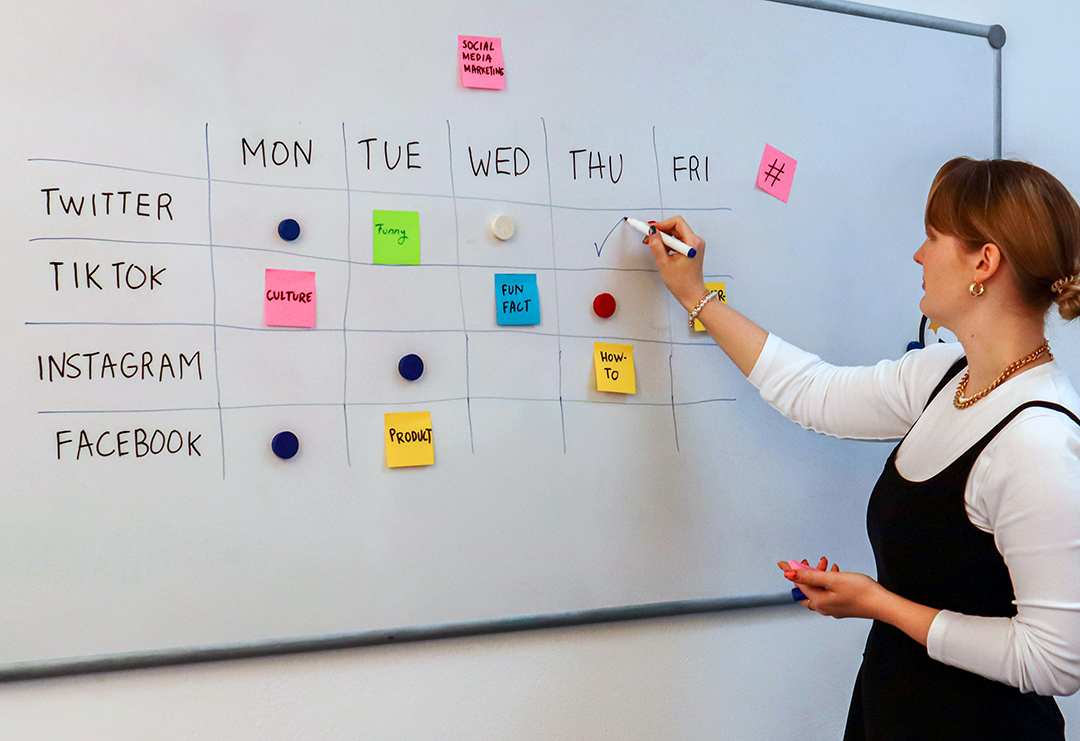
A social media content calendar is a planning tool used to organise upcoming posts across platforms such as LinkedIn, Instagram and Facebook.
It typically includes:
- publishing date
- social platform
- content topic
- caption or description
- media assets
- campaign tags
Businesses use content calendars to maintain consistency, coordinate campaigns and align social media with wider marketing activity.
What to do this week

reating a social media content calendar does not require complex tools.
You can begin with a simple spreadsheet or planning document.
Start by identifying the types of content you want to share regularly. Most businesses use a mix of several content categories.
Common categories include:
- Educational posts thatprovideuseful advice
- Promotional content highlighting services or offers
- Behind-the-scenes insights about the business
- Customer testimonials or case studies
- Industry insights or commentary
Once these categories are defined, you can distribute them across a weekly posting schedule.
For example:
Monday – educational tip
Wednesday – service highlight
Friday – customer testimonial
This structure prevents the common problem of posting only promotional content.
A content calendar should also align with other marketing activities. For example, when a new article is published on your website, it can be promoted through social media posts to increase visibility.
Businesses often combine blog content with newsletters and social media promotion as part of a wider strategy including email marketing: https://bazuru.com/email-marketing/
Tools for Managing a Social Media Content Calendar

Businesses use different tools to manage social media planning.
Common options include:
- spreadsheets such as Google Sheets
- project management tools like Trello or Asana
- dedicated social scheduling tools
- marketing platforms that combine analytics and scheduling
Many businesses begin with a simple spreadsheet before moving to more advanced scheduling tools.
Mark up facts / structured data
Although social media content calendars focus on scheduling posts, they can also influence website performance.
When social media drives traffic to your website, search engines monitor how users interact with that content. Pages that attract engagement and backlinks can perform better in search results.
Structured data helps search engines understand the content on your website. Businesses investing in strong website development foundations often see better performance because their content loads quickly and is organised clearly:
https://bazuru.com/website-development/
Reviews & trust
Trust plays a significant role in digital marketing.
Potential customers often look at a company’s social media profiles before deciding whether to make contact.
A consistent posting schedule helps reinforce credibility.
When businesses regularly share useful content, updates and customer feedback, audiences are more likely to view the company as active and trustworthy.
Sharing testimonials or success stories can strengthen reputation and encourage potential clients to take action.
Common mistakes & quick fixes
Many businesses attempt social media marketing without a clear plan.
This often leads to several common problems.
Some companies post only promotional messages, which can feel repetitive to audiences. Others post inconsistently, leaving long gaps between updates.
These issues can usually be solved with simple adjustments.
- Plan content at least one month in advance
- Maintain a balance between educational and promotional posts
- Repurpose blog articles into shorter social posts
- Schedule posts using social media tools
- Review analytics regularly
UK examples
Many UK businesses use social media calendars to maintain consistent marketing.
A restaurant may plan weekly content featuring menu updates, behind-the-scenes preparation and customer reviews.
A property company might schedule market updates, property listings and short videos explaining the buying process.
Retail businesses often use calendars to coordinate seasonal promotions such as Christmas campaigns or summer offers.
These examples demonstrate how structured planning helps businesses maintain visibility throughout the year.
What to measure
A content calendar is only useful if performance is measured.
Several metrics can help evaluate social media success.
- Engagement rates
- Website traffic from social media
- Follower growth
- Click-through rates
- Leads or enquiries generated from posts
Monitoring these metrics helps businesses refine their strategies over time.
Monthly checklist
A simple monthly workflow helps maintain consistency.
At the beginning of each month:
- Plan the next four weeks of content
- Schedule posts in advance
- Identify campaigns or promotions
- Review analytics from the previous month
- Adjust future content based on performance
Planning ahead reduces last-minute posting and ensures social media supports wider marketing campaigns.
Compliance & privacy
Businesses using social media must consider privacy and compliance.
Any collection of customer data through social platforms or contact forms must follow GDPR regulations. Companies should clearly explain how personal data will be used and ensure marketing communications follow consent requirements.
Transparency helps maintain customer trust.

FAQ
How far in advance should a social media content calendar be planned?
Most businesses plan social media content one month in advance. This allows flexibility while maintaining consistency.
How many posts should be scheduled each week?
Many businesses publish between three and five posts per week depending on their audience and platform.
What platforms should be included in a social media content calendar?
Most calendars include LinkedIn, Instagram and Facebook, although some businesses also include TikTok or YouTube depending on their audience.
Conclusion
Social media can be a powerful marketing tool, but only when it is managed consistently.
A well-planned social media content calendar helps businesses organise ideas, maintain regular posting and connect social activity with wider marketing goals.
Instead of reacting to social media each day, businesses with structured calendars know exactly what content is coming next.
Over time, this consistency helps build brand awareness, strengthen credibility and drive meaningful engagement with potential customers.
If you’re searching for a digital marketing company to help drive results across paid ads, SEO, and social, get in touch: https://bazuru.com/contact/
The information in this article is for general guidance only. Results will vary according to business, market and execution.


