

Local SEO isn’t new, but in 2026 it’s far less forgiving. Small businesses can no longer rely on half-filled profiles, a few reviews, and the hope that Google will work things out for them. Local search has become more competitive, more visual, and far more intent-driven. If you want to show up when people search “near me”, your local SEO strategy has to reflect how people actually search now.
This guide breaks down local SEO for small businesses in 2026. It focuses on what has changed, what still matters, and what you should prioritise if your goal is more local customers from Google rather than theoretical rankings.
What’s changed in local SEO
Local search results are more crowded than ever. Google Business Profiles dominate the page. Map packs often appear before organic results. Reviews, photos, and real-world engagement signals now influence visibility as much as traditional SEO factors.
Google has also become far better at understanding intent. Someone searching “emergency plumber near me” expects fast, local answers. Someone searching “best café in Totnes” expects proof, not marketing language. Local SEO in 2026 is built on relevance, trust, and consistency.
- Google Business Profile now sits at the centre of local search optimisation
- Google Maps SEO is as important as website rankings
- Reviews influence both visibility and click-through rates
- “Near me” searches continue to grow across mobile and voice
Local SEO and AI-driven search results in 2026
Local SEO in 2026 isn’t limited to map packs and listings. Google increasingly uses AI-driven summaries to answer local searches directly. These summaries often pull information from Google Business Profiles, reviews, FAQs, and clearly written website content.
This means ranking alone isn’t always enough. If your information isn’t clear, structured, and written in plain language, Google’s AI may ignore you even if you technically rank.
- AI summaries pull heavily from Google Business Profile content
- Reviews and FAQs influence how your business is described
- Clear answers outperform clever copy
- Businesses that explain services simply are surfaced more often
Why local SEO matters for small businesses
Local SEO levels the playing field. You don’t need the biggest budget. You need the clearest local relevance. For service-based businesses and bricks-and-mortar shops, local search marketing often delivers the highest-intent traffic available.
People searching locally are ready to act. They want directions, phone numbers, prices, and reassurance that you’re legitimate. If your local business SEO is weak, you’re invisible at the moment customers are ready to buy.
This practical, outcome-focused approach runs through the advice we share on the Bazuru blog.
- Local searches convert better than general searches
- Google Maps visibility drives calls and footfall
- Small business SEO works best when it’s location-focused
- Local SEO supports paid ads, social, and referrals
Google Business Profile in 2026
Optimising your Google Business Profile is no longer optional. It’s the foundation of local search optimisation. Google pulls information from your profile into Maps, local packs, and AI-driven results.
Profiles that perform well in 2026 are complete, active, and regularly updated. Businesses that treat their profile like a static directory listing fall behind quickly.
- Choose accurate primary and secondary categories
- Keep opening hours, holidays, and contact details current
- Add photos regularly, not once a year
- Use posts to show activity and relevance
- Answer questions directly on the profile
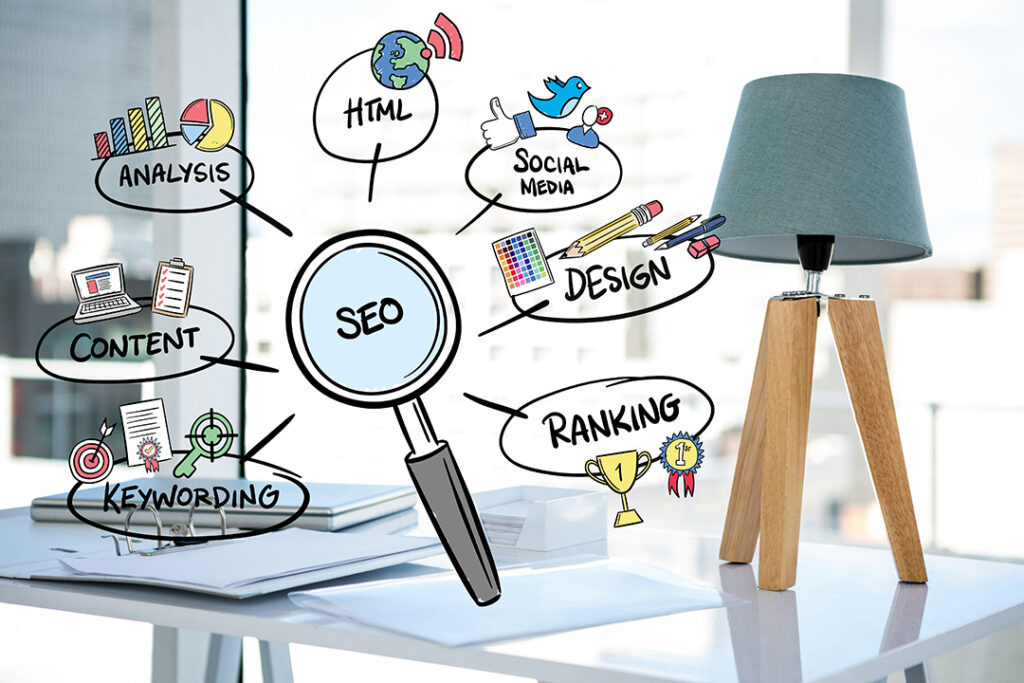
On-page local SEO that supports your Google Business Profile
Your Google Business Profile attracts attention. Your website confirms credibility. In 2026, Google constantly cross-checks the two. If your profile says one thing and your website says another, trust drops.
Strong local SEO relies on clear, location-specific pages that explain what you do, where you do it, and who it’s for. Generic service pages with a town name swapped in no longer perform well.
- Create dedicated pages for key services and locations
- Use natural location references, not keyword stuffing
- Add FAQs based on real customer questions
- Internally link services to relevant location pages
- Keep business details consistent site-wide
This alignment is a core principle behind how we approach site structure in our Website Design services.
Google Maps SEO and local rankings
Google Maps SEO is driven by proximity, relevance, and prominence. You can’t control distance, but you can influence the other two.
Relevance comes from how closely your profile and website match the search. Prominence comes from reviews, citations, links, and engagement. Together, they determine whether you appear in the local map pack.
- Optimise service descriptions for real search terms
- Add products and services to your profile
- Encourage calls and direction requests
- Build accurate, consistent local citations
- Earn local links where possible
“Near me” searches and search intent
“Near me” searches signal urgency. Google treats them as mobile-first and action-focused. Your content, profile, and website need to reflect that intent.
That means clear location signals, fast pages, and obvious next steps. Confusion costs rankings and customers.
- Include location references naturally across your site
- Make contact details easy to find
- Ensure mobile usability is strong
- Match page content to local intent
Voice search and conversational local queries
Voice search and AI-led queries have made local search more conversational. People ask full questions, especially on mobile.
Businesses that mirror this language perform better. FAQ sections, service explanations, and natural phrasing now support both voice search and AI summaries.
- Write content the way customers speak
- Use question-based headings where useful
- Add short, direct answers near the top of pages
- Focus on clarity over keyword density
Online reviews and local SEO in 2026
Reviews influence rankings, but more importantly, they influence clicks. A business with strong reviews often wins even when ranking slightly lower.
Google looks at volume, freshness, and sentiment. Customers look at credibility. Both matter.
- Ask for reviews consistently
- Respond professionally to all reviews
- Avoid incentives or fake reviews
- Use feedback to improve services
Reviews are a key trust signal within broader SEO strategies, including those covered in our SEO services.
How local content supports rankings and visibility
Listings alone rarely differentiate businesses anymore. Local content fills the gap. Blogs, guides, and FAQs that reference real locations and services help Google understand relevance beyond a profile.
They also reassure customers that you know the area and the problems they face.
- Publish location-specific guides and FAQs
- Answer common local customer questions
- Reference real service areas and scenarios
- Keep content practical, not promotional
- Update evergreen local content regularly
Local citations and consistency
Local citations still matter, but only when they’re accurate. Inconsistent business names, addresses, or phone numbers weaken trust signals.
Quality now matters more than quantity.
- Keep name, address, and phone number consistent
- Prioritise reputable UK directories
- Update old listings instead of creating duplicates
- Remove outdated or incorrect entries
Local SEO strategies by business type
Service-based businesses benefit most from service-area optimisation and strong Google Business Profiles. Trades and home services rely heavily on reviews and proximity signals.
Bricks-and-mortar shops benefit from Maps visibility, photos, and clear categories.
Multi-location businesses need separate profiles and structured location pages.
- Service businesses should focus on areas served
- Shops should prioritise footfall and proximity signals
- Multi-location businesses need individual profiles
- Avoid sharing one profile across multiple locations

Understanding why competitors rank higher
If competitors outrank you, there’s usually a clear reason. In 2026, copying blindly wastes time. Understanding patterns saves it.
Look at competitor profiles, reviews, photos, categories, and location pages. Differences become obvious quickly.
- Compare Google Business Profile categories
- Review competitor review volume and freshness
- Check photo quality and posting activity
- Analyse location page structure
- Focus on gaps, not imitation
Local SEO checklist for small businesses
Local SEO works best when it’s systematic.
- Fully optimise Google Business Profile
- Create clear service and location pages
- Clean up and maintain citations
- Generate and respond to reviews
- Track actions, not just rankings
- Update content regularly
Tracking local SEO results
Tracking local SEO in 2026 means focusing on actions, not visibility alone. Rankings matter less than real behaviour.
Calls, direction requests, form submissions, and bookings show whether your strategy works.
- Track calls and direction requests from Google Business Profile
- Monitor form submissions from local pages
- Compare branded and non-branded local searches
- Focus on enquiry quality, not volume
Prioritising local SEO when time or budget is limited
Not every business can do everything at once. In most cases, a small number of fixes deliver the biggest gains.
Priority order:
- Google Business Profile accuracy and activity
- Reviews and responses
- Core service and location pages
- Citation cleanup
- Ongoing content and optimisation
Common local SEO mistakes to avoid
Most failures come from neglect, not complexity.
- Leaving Google Business Profile untouched
- Inconsistent business details online
- Thin location pages with no value
- Chasing rankings instead of customers
Conclusion
Local SEO in 2026 is about credibility, relevance, and consistency. For small businesses, it remains one of the most effective ways to attract high-intent customers without relying entirely on paid ads.
When your Google Business Profile, website, reviews, and local content work together, local search becomes predictable rather than mysterious.
Get help with your local SEO
If you’re searching for a digital marketing company to help drive results across paid ads, SEO, and social, get in touch: https://bazuru.com/contact/
Disclaimer
The information in this article is for general guidance only. Results will vary according to business, market and execution.


